FICPA Presentation

THE CHANGING LANDSCAPE OF M&A IN THE ACCOUNTING INDUSTRY

How private equity has transformed CPA firm valuations, deal structures, and succession planning.

We Wrote the Book

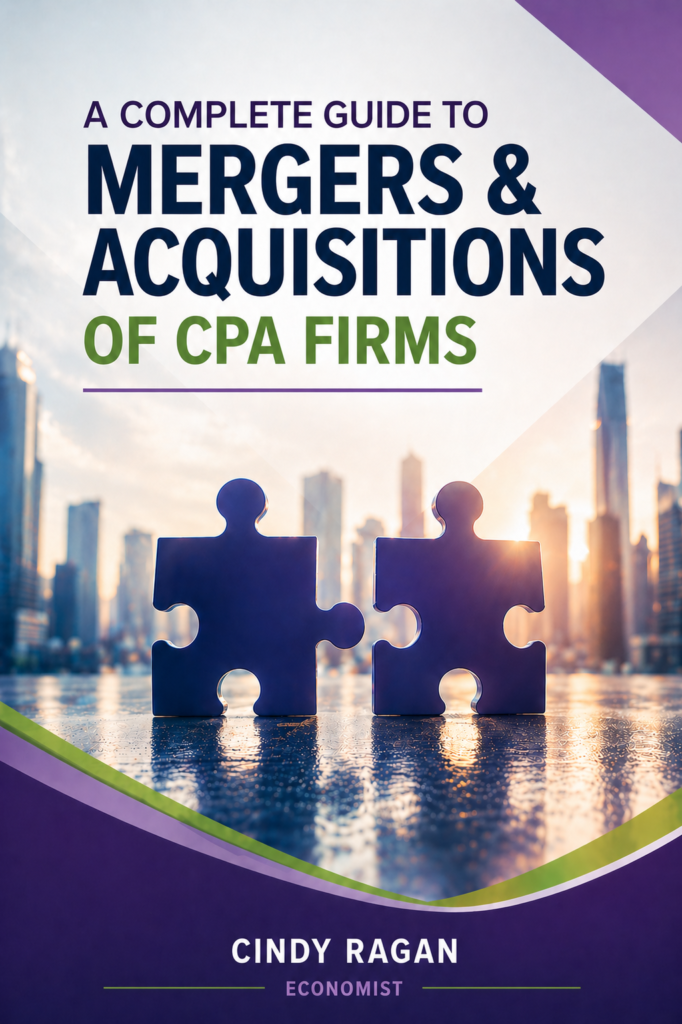
The Complete Guide to M&A of CPA Firms

By Cindy Ragan
CVA, Economist

Private equity has fundamentally reshaped the CPA marketplace. PE-backed platforms now compete head-to-head with national legacy firms, regional acquirers and even smaller local buyers — driving multiples up, accelerating deal pace, and introducing entirely new deal structures.

The presentation below summarizes the data, benchmarks and structures behind today’s market. It is based on Cindy Ragan’s keynote to the Florida Institute of Certified Public Accountants (FICPA).

Profit Margin Benchmarks — PE Firms

What PE buyers expect.

PE-backed acquirers target firms with strong, defensible margins, recurring revenue, and operational discipline. The bar is higher than the legacy market — but the multiples reflect that.

Target EBITDA Margin

≥ 30%

Recurring Revenue

65%+ preferred

Typical Multiple

8–12× EBITDA

Target EBITDA Margin

The 40%+ tier.

Higher performing firms — those with margins exceeding 40%, especially firms with strong advisory services and technology leverage.

Profit Margin Benchmarks — Legacy Firms

Where legacy firms typically sit.

Traditional CPA firms — partnership-driven, tax-heavy, with limited advisory penetration — generally show lower margins and different valuation characteristics, often priced on revenue rather than EBITDA.

Typical EBITDA Margin

15–25%

Common Multiple

1.0–1.5× revenue

Recurring Revenue

Variable

Transaction Structures

How modern PE deals are structured.

Cash at Close

Typically 60–80% of total consideration, depending on profile.

Rollover Equity

Sellers retain meaningful equity in the PE platform — alignment with future growth.

Earn-Outs

Performance-based payments tied to revenue / EBITDA over 1–3 year windows.

Seller Notes

Bridge financing from seller, often subordinated, with defined interest and term.

Employment & Consulting

Continuing roles for owners, with compensation tied to integration milestones.

Non-Competes

Geographic and time-bound restrictions tailored to the firm’s market.

Confidential. Senior-level. White-glove.

Ready to discuss your practice?

Every conversation begins with discretion and ends with a clear plan. Speak directly with Cindy Ragan, CVA.

From Blog

Many of our competitors promise their clients all cash deals. But we have found that those are the worst M&A transactions for long-term success, for both parties.

If the Seller gets all cash at closing then he/she has no incentive to carefully transition the clients over time, and it takes time. Instead, they are off sipping martinis, believing they got the best deal ever, only to find themselves in court a year later.

Once the Buyer realizes that he/she is not going to get all of the clients/revenue that they paid for, they litigate. And a majority of the clients won’t transfer without Seller involvement, so attrition will be high.

We know this because they call us as expert witnesses. In addition, all cash deals get lower multiples because all of the risk is with the Buyer, so they pay less.

Free Answers

Request a Call back